Contained Vessels
Crafting Daily Rituals by Ryuji Mitani
October 18 – 26, 2025

Ryuji Mitani’s work centers on the role of craft in everyday life. Through hand-carved wooden containers—objects designed for holding, storing, and serving—he explores how handmade forms shape the small routines of daily living. His pieces do not seek attention, but instead bring a sense of balance and calm to the home.
Exhibition Dates:
October 18 – October 26, 2025 (Wednesdays to Sundays)
Opening Reception:
Saturday, October 18, 1:00-5:00PM

A leading voice in the Seikatsu Kogei movement, Mitani represents a contemporary evolution of Japan’s folk craft philosophy that places value on the beauty of use. His approach bridges the physical act of carving and lacquering with the intangible rituals of living, dissolving boundaries between utility and art.
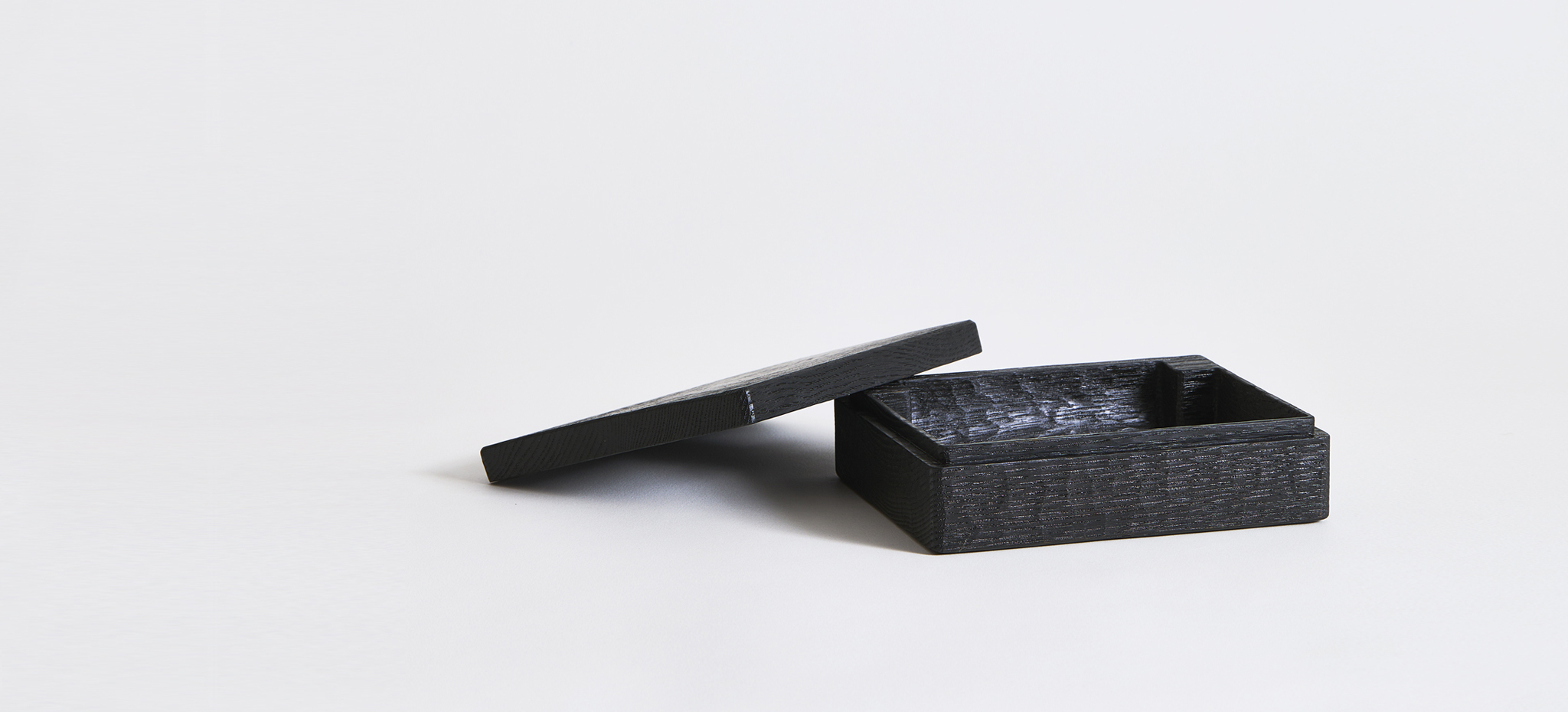
This exhibition presents a collection of Mitani’s wooden works for daily rituals, including containers for confectionaries, incense, spices, butter, cotton swabs, toothpicks, letters, and cards, alongside exclusive Nalata Nalata collaborations such as lidded cups for coffee and tea.
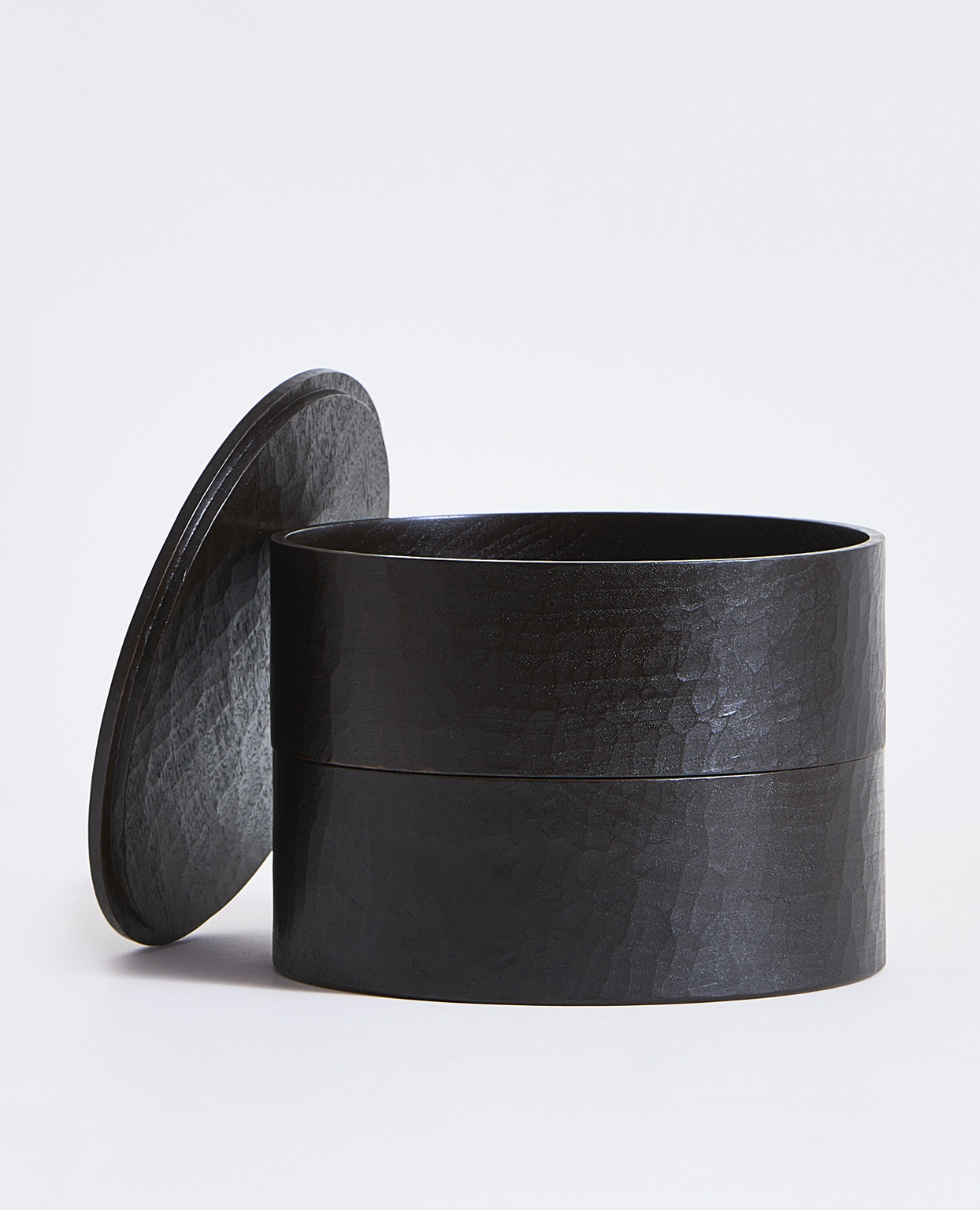


Each time Mitani joins us for an exhibition, one of our greatest joys is developing a new collaborative piece together. For Contained Vessels, we asked Mitani to create something tied to our everyday lives: lidded drinking vessels to keep beverages warm, a request born from the reality of our busy days and our tendency to return to our drinks throughout them. The resulting pair of cups are as thoughtful as they are beautiful—a tall White Urushi Coffee Cup with Lid and a smaller Noir Teacup with Lid. The white cup is made for coffee, perfect for mornings when life moves quickly and a warm cup waits patiently to be revisited. Its surface reveals delicate hand-brushed strokes beneath layers of white lacquer, and the weighty lid fits snugly to retain heat. The Noir Teacup, smaller and more intimate, features deep faceted carving beneath layers of black lacquer that catch the light like a cut gemstone. Both designs bear Mitani’s signature chisel marks, revealing the honesty of the material and the maker’s hand.


Alongside these new works, the exhibition features some of Mitani’s most beloved forms—pieces that have been a part of his practice over decades. The Butter Case, introduced in 1983, remains one of his most recognizable designs in his timeline, It embodies the warmth of domestic ritual, transforming an everyday act into a moment of care. The Coffee Case, introduced later, exemplifies Mitani’s philosophy that craft can elevate even the smallest gestures of daily life. Both designs continue to reveal his sensitivity to proportion and purpose, bridging the functional and emotional aspects of living with craft.


Also, featured is the Boat Stationery Bowl, a piece whose curved silhouette recalls the shape of a wooden vessel at rest. Originally created as a tea scoop, this larger version is a stationery holder, and is in itself an emblem of Mitani’s approach—functional, poetic, and open to reinterpretation.


In addition to the containers, the exhibition includes several of Mitani’s artworks including a gouache painting, a wooden assemblage, a Lighthouse sculpture and a Boat sculpture. The two flat works share the title “Y.” One depicts a figure forming the letter Y with their body; the other arranges wooden fragments into a Y combined with an old glass bottle. “I thought the initial Y might resonate with the theme of anonymity—‘just an ordinary person’—which is also the theme of this exhibition,” Mitani writes. Both pieces were created years ago, the painting in 1996 and the wooden work around 2003. The lighthouse and boat, made more recently, continue Mitani’s exploration of connection. “They are both things that link one end to another, connecting one person to another,” he explains. Like the tin-can telephone he presented in a past exhibition, Crafts and Then. these works reflect his interest in communication, distance, and the ties that link people through objects.


Contained Vessels embodies Mitani’s enduring belief that the essence of craft lies not in display, but in the way it supports the rhythm of everyday life—how a carved lid, a humble box, or a small vessel can hold meaning far beyond its function.
Special thanks to Ryuji Mitani, Junko Mitani, Ngân Nguyen, Aya Nihei, Kazuhiro Shiraishi, Matthew Johnson, Armando Rafael Moutela and Soto Sake.